
An evening that honored the Folk Art Museum’s current exhibition, An Ecology of Quilts: The Natural History of American Textiles, delved into the enduring dialogue between historic craft and contemporary fashion. Award-winning designer Emily Adams Bode Aujla appeared at the American Folk Art Museum for an intimate, thought-provoking conversation with Dr. Emelie Gevalt, alongside Deborah Davenport and Stewart Stender Deputy Director and Chief Curatorial and Program Officer.
As the founder and creative force behind luxury brand BODE, Bode Aujla is renowned for her deeply narrative-driven approach to design. The brand is rooted in storytelling, craftsmanship, and American history, with each collection inspired by the conservation of textiles, techniques, and memory. Through personal and often intimate narratives, BODE transforms historical fragments into modern fashion statements making the past feel strikingly present.
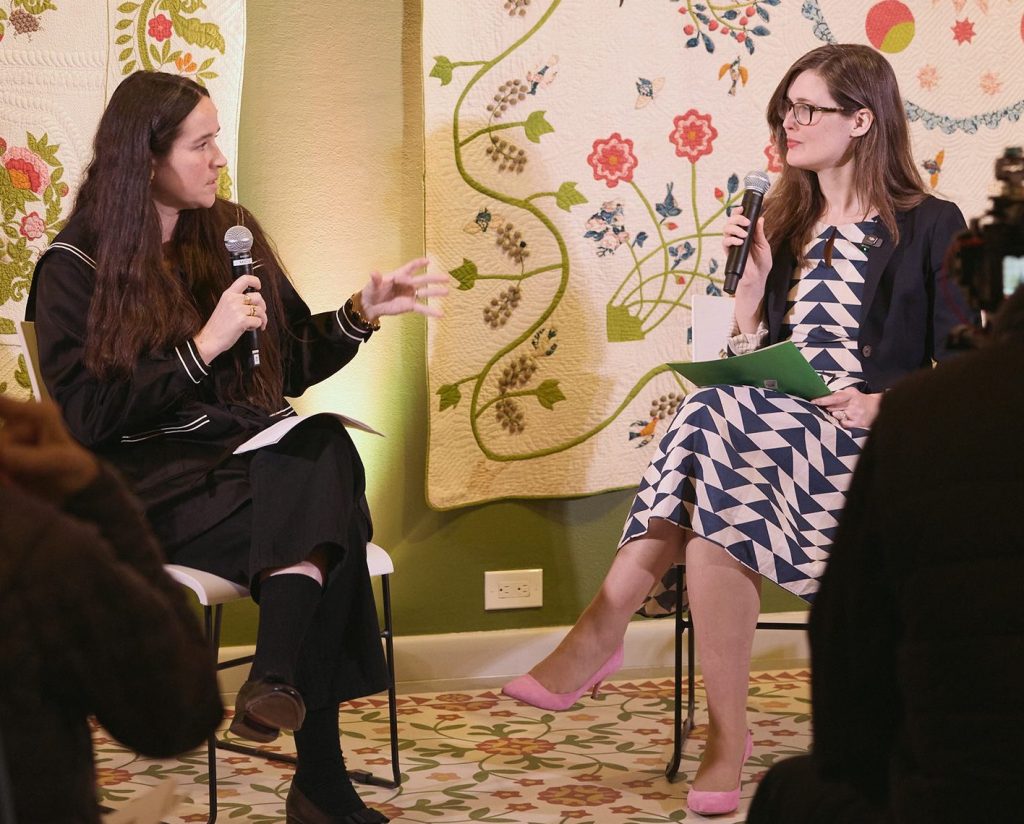
Emily Adams Bode Aujla and Dr. Emelie Gevalt /photo credit Bode
Set against the backdrop of An Ecology of Quilts, the conversation examined quilts as more than decorative objects, positioning them as ecological, cultural, and historical documents. The exhibition brings together approximately 30 quilts spanning the 18th through the 20th centuries from AFAM’s extensive collection of over 600 quilts, presenting them through an ecological lens. It traces the relationships between the environment, material sourcing, trade routes, and the evolution of quilting as a quintessential American art form.
Bode Aujla and Gevalt discussed how textile origins such as harvested fibers, natural dyes, and early industrial technologies continue to influence contemporary fashion and sustainability conversations today. Moving beyond individual quilt makers, the exhibition and discussion highlight how materials, global trade networks, environmental impact, and social context shape both historical and modern design. Quilts, they noted, tell layered stories through fabric choices, botanical symbolism, provenance, and oral histories across centuries.
The event drew a stylish crowd of Museum supporters, fashion insiders, and content creators, underscoring the growing intersection of fashion, art, and sustainability.
An Ecology of Quilts is on view through March 1, with free admission always offered at the Museum. Looking ahead, AFAM will debut two new exhibitions in April Self-Made: A Century of Inventing Artists and Folk Nation: Crafting Patriotism in the United States. The Museum will also celebrate its 65th anniversary with a gala on May 6 at the Mandarin Oriental in Columbus Circle.
Founded in 1961, the American Folk Art Museum is the nation’s leading institution dedicated to folk and self-taught artists, celebrating creativity shaped by personal experience rather than formal training. With a collection spanning four centuries and nearly every continent, AFAM continues to engage global audiences through exhibitions, programs, and publications always with free admission.