
Hope for Depression Research Foundation marked its 20th anniversary at The Plaza Hotel, celebrating groundbreaking research, emerging treatments and the people working to advance mental health care.
The Hope for Depression Research Foundation (HDRF) celebrated its 20th anniversary with its annual Luncheon Seminar on Tuesday, November 10, 2026, at The Plaza Hotel in New York City. Bringing together leading scientists, philanthropists, business leaders and supporters, the milestone event raised an impressive 1 million for depression research and honored Grammy Award-winning singer and mental health advocate Melissa Etheridge.
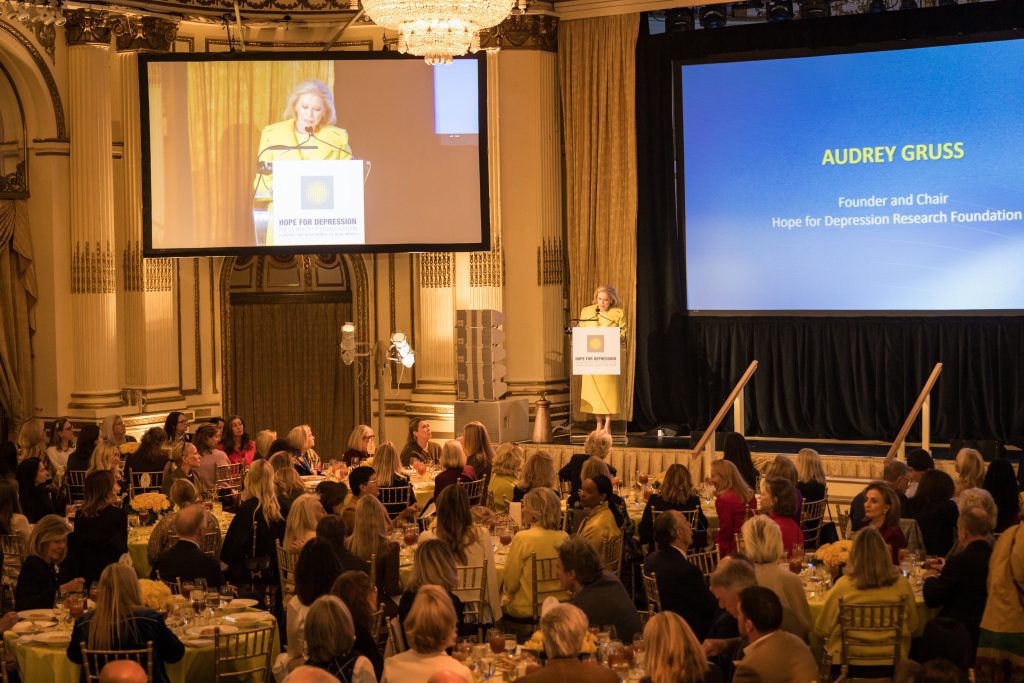
Audrey Gruss photo : Dan Bassini
Titled “20 Years of Research: Emerging New Treatments,” the luncheon explored the latest scientific discoveries and promising developments in depression treatment. Television journalist and author Chuck Scarborough served as Master of Ceremonies.
Audrey Gruss Celebrates Two Decades of Advancing Depression Research
HDRF Founding Chair Audrey Gruss, who established the organization in 2006 in memory of her mother, Hope, reflected on the foundation’s accomplishments and its mission to transform the understanding and treatment of depression.
Addressing more than 300 guests, Gruss highlighted the progress made through HDRF’s Depression Task Force, an international collaboration of leading brain scientists working to identify new therapeutic targets and translate scientific discoveries into effective treatments.
Over the past 20 years, the research team has investigated approximately 2,000 genes implicated in depression and identified 20 promising therapeutic targets for further investigation. The foundation currently supports five clinical trials, with additional studies in development at leading research institutions, including Mount Sinai, Columbia, Weill Cornell and the Max Planck Institute in Germany.
Gruss emphasized that the organization’s ultimate goal is to move discoveries from the laboratory into clinical applications that can offer patients more effective treatment options.
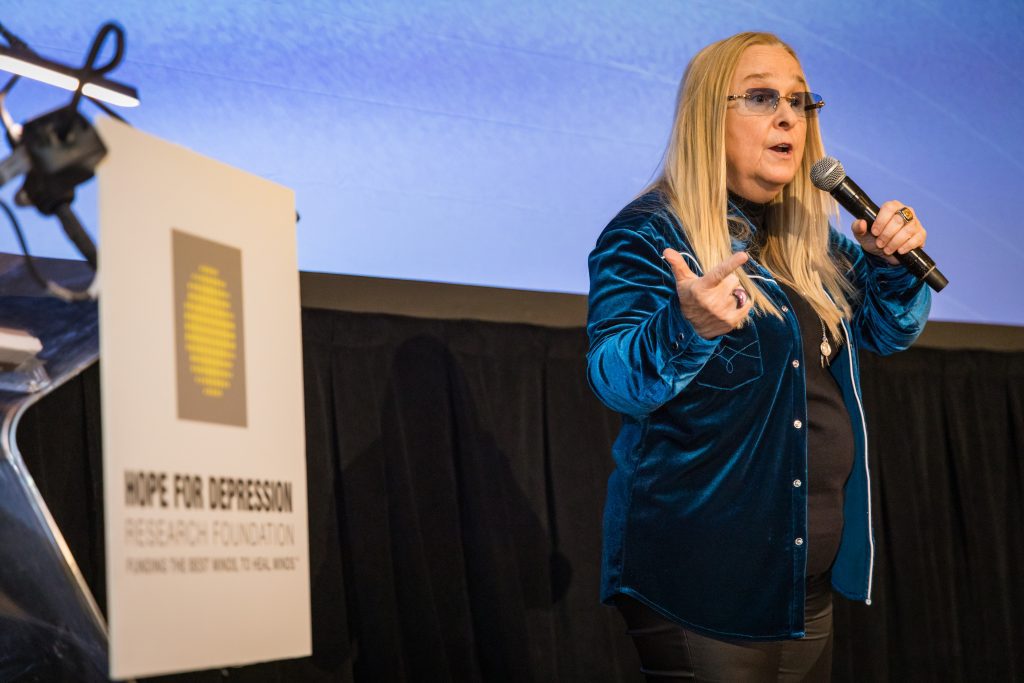
Melissa Etheridge photo: Dan Bassini
Melissa Etheridge Receives the 2026 HOPE Award for Mental Health Advocacy
One of the afternoon’s most moving moments came when Gruss presented Melissa Etheridge with the 2026 HOPE Award for Mental Health Advocacy, recognizing her courage, resilience and commitment to helping others.
Etheridge’s advocacy is deeply personal. Following the tragic loss of her son, Beckett, in 2020 to opioid addiction, the singer transformed her grief into action by establishing the Etheridge Foundation. The organization supports research and the development of new treatments for opioid use disorder and addiction.
During her heartfelt acceptance speech, Etheridge spoke candidly about her own experience with depression and the importance of removing the stigma surrounding mental health.
Reflecting on her personal journey, she acknowledged that success and fame do not necessarily protect someone from depression. She also praised HDRF’s scientists for their commitment to advancing brain science and encouraged those seeking to make a difference in the mental health crisis to support research.
Her message underscored the importance of scientific discovery, compassion and continued investment in mental health initiatives.

NEW YORK, NY – NOVEMBER 10: Susan Magrino, Bettina Anderson, Sarah Wetenhall and Eleanora Kennedy (Photo by Sean Zanni /PMC)
Dr. Husseini Manji Discusses Emerging Depression Treatments
The luncheon featured a keynote presentation by Dr. Husseini Manji, Professor of Psychiatry at the University of Oxford, who discussed advances in brain circuitry research and the future of antidepressant treatments.
Dr. Manji highlighted groundbreaking work by HDRF’s Depression Task Force, whose members include prominent researchers Eric Nestler, MD, PhD; Conor Liston, MD; Helen S. Mayberg, MD; Rene Hen, PhD; and Jonathan Javitch, MD, PhD.
A central theme of his presentation was precision psychiatry, an emerging approach that seeks to move beyond traditional symptom-based diagnoses and trial-and-error medication strategies. Instead, researchers are working toward identifying biological subtypes of depression and developing more targeted therapies.
He emphasized that understanding the underlying biology of depression is essential to creating more effective treatments and improving outcomes for patients.
Hope for Depression Announces New $600,000 Young Investigators Program
HDRF Executive Director Louisa Benton shared updates on the foundation’s latest research initiatives, educational programs and community outreach efforts.
Among the major announcements was a new $600,000 grant to establish a Young Investigators Program. The initiative will provide graduate students with opportunities to work alongside leading scientists in HDRF’s Depression Task Force laboratories, helping develop the next generation of mental health researchers.
Benton also celebrated the continued success of HDRF’s Race of Hope 5K series in Southampton, New York City and Palm Beach. The 2026 races collectively raised more than $1.5 million to support depression research and awareness.
Definium Therapeutics Receives HOPE Corporate Visionary Award
The foundation also recognized New York-based biotech company Definium Therapeutics with the 2026 HOPE Corporate Visionary Award for its contributions to the development of innovative depression treatments.
Accepting the award, Daniel Karlin, Chief Medical Officer of Definium Therapeutics, discussed the company’s investigational LSD-based treatment, DT120, which has reported positive results in Phase 3 clinical trials and is approaching the FDA regulatory review process.
Karlin described depression as a complex brain illness that can profoundly affect how individuals view themselves, their lives and their future. He discussed the potential of new therapeutic approaches to create meaningful and lasting changes for people living with depression.
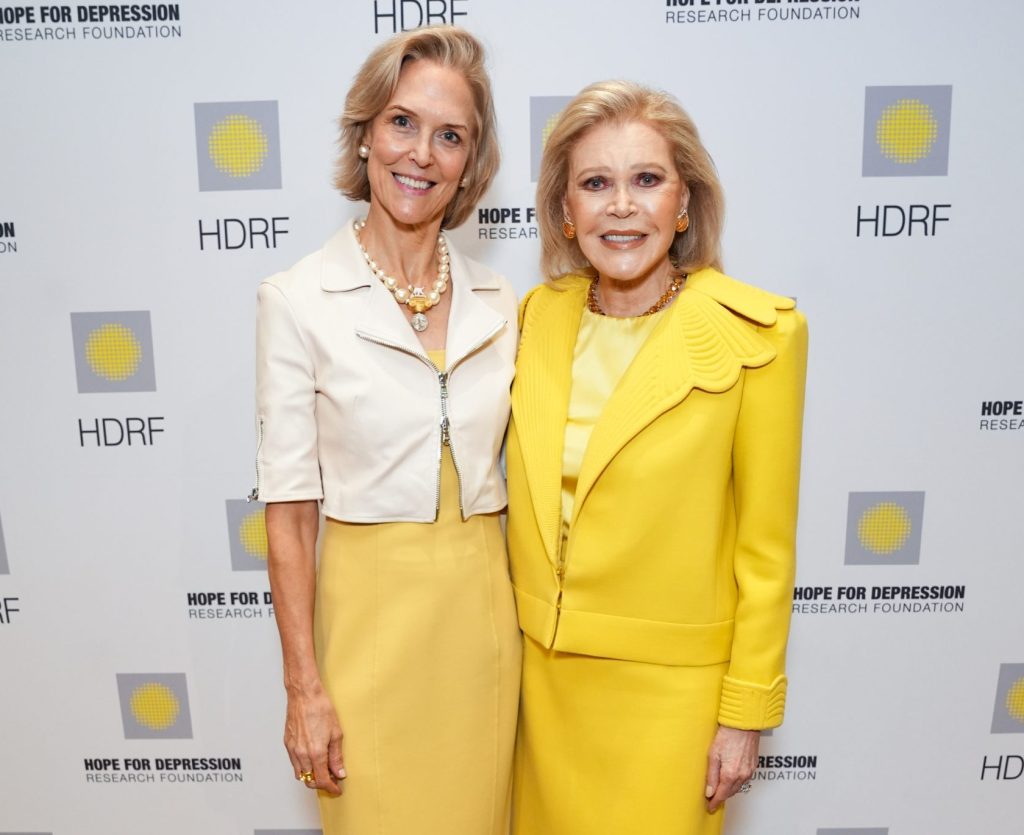
NOVEMBER 11: Louisa Benton and Audrey Gruss attend Hope For Depression Research Foundation’s 20th Annual HOPE Luncheon on November 11, 2026. (Photo by Sean Zanni /PMC)
Hope for Depression Supporting the Future of Mental Health Research
The 2026 HDRF Luncheon brought together an influential group of New York philanthropists, business and media professionals, asset managers, social leaders and celebrities, all united by a commitment to advancing mental health research.
The event’s co-chairs included Marchesa Barel di Sant’Albano, Holly Bartlett, Christina and Brian Flaherty, Susan Gutfreund, Maru Hagerty, Kim M. Heirston, Tania Higgins, The Josephberg Family, Eleanora Kennedy, Kristen Maltese Krusen, Kitty and Bill McKnight, Thomas C. Quick, Barbara and Randall Smith, Scott Snyder, Barbera Hale Thornhill and Sarah Wetenhall.
The luncheon was made possible through the generous support of its sponsors and donors, including Alina de Almeida and John Paulson, EGL Charitable Foundation, Ann and Charles B. Johnson, Stephanie Olmsted, Definium Therapeutics, The Richard S. and Karen T. LeFrak Foundation, and numerous additional philanthropic partners.
Hope for Depression Research Foundation: 20 Years of Making a Difference
Founded in 2006 by philanthropist Audrey Gruss, the Hope for Depression Research Foundation is dedicated exclusively to funding innovative research into the origins, diagnosis, treatment and prevention of depression and related mood disorders.
Since its founding, HDRF has provided more than $90 million through over 200 research grants, supporting scientific discoveries that could transform how depression is understood and treated.
The foundation focuses on advancing research into depression, bipolar disorder, postpartum depression, post-traumatic stress disorder, anxiety disorders and suicide prevention.
With conventional antidepressant medications not providing adequate relief for a substantial number of patients, HDRF continues to invest in new scientific approaches and clinical research aimed at improving treatment options.
As the organization celebrates two decades of progress, its 2026 anniversary luncheon reinforced an important message: through collaboration, scientific innovation, philanthropy and advocacy, a future with better mental health treatments is within reach.
Interested in last year’s gala? All about it here.